We started again from El Calafate.
Picked up the car and pointed south—toward the second half of the journey: Torres del Paine.
Some roads were closed due to winter conditions and construction, so we took a longer route. The only real concern was timing—making it to the Argentina–Chile border before it closed. Por suerte, we made it just in time. Smooth crossing.
But by then, it was already dark.
And Patagonia had shifted. Winter had arrived early. The roads ahead were icy, unpredictable. We were still hours away from our hotel inside Torres del Paine, and the advice was clear: stop in Puerto Natales.
So we did.
We managed to adjust part of our reservation and spent the night at one of the most traditional hotels in town—beautiful, lindísimo, full of character and history.
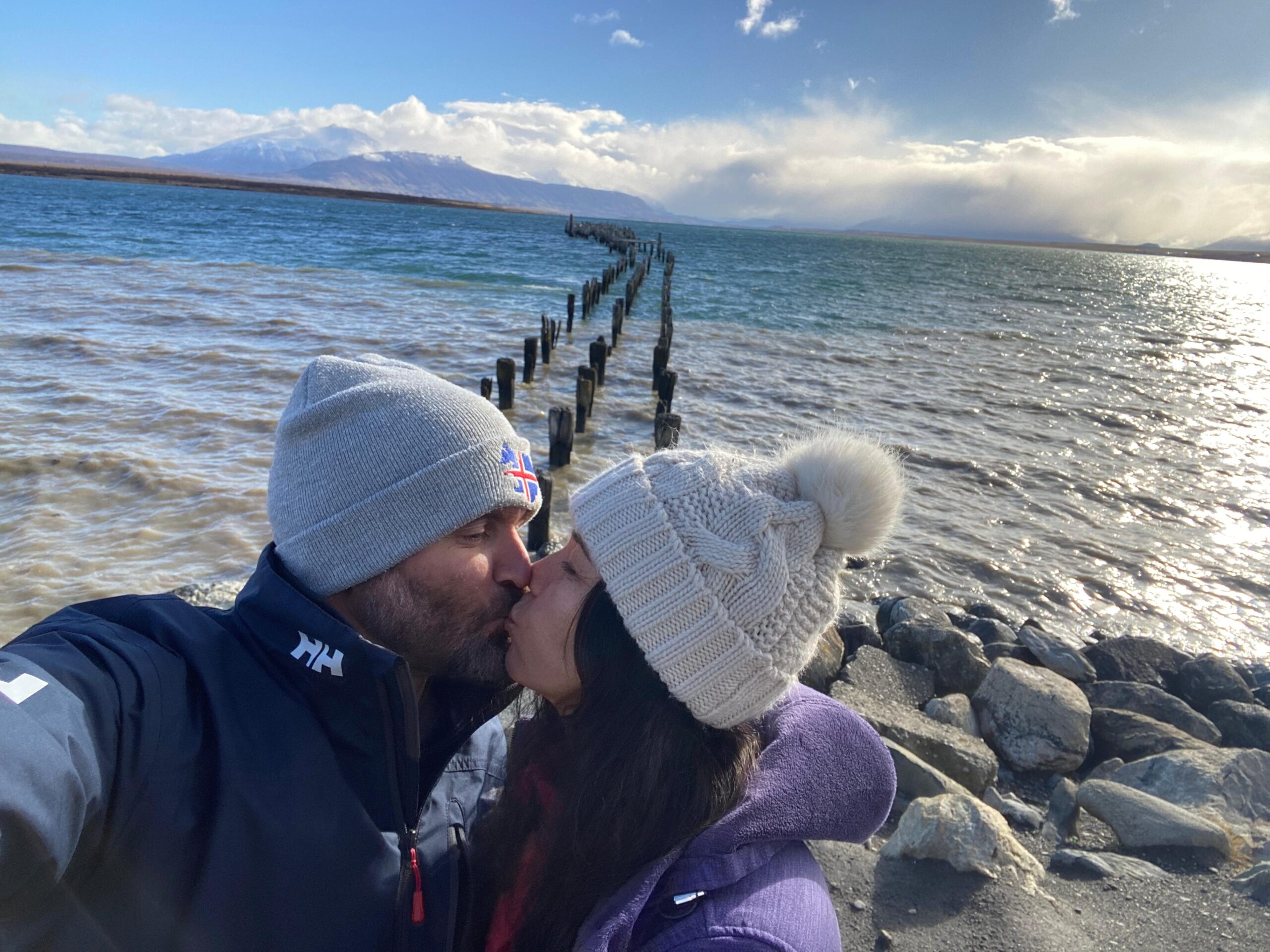
The next morning, while my wife went out to find a warmer jacket—it was colder than expected—I wandered down to a pier.
Still water.
Low fog.
Soft, diffused light.
A calm that felt almost unreal for Patagonia. One of those moments that doesn’t demand anything from you—just presence.
After fueling up (important—there are no gas stations inside the park), we drove into Torres del Paine.
We stayed at Hotel del Paine, with breakfast and dinner included—simple, well done. That first day, we had lunch at Hotel Serrano, very good, and then spent the afternoon scouting locations. That’s the rhythm: you don’t chase the shot—you prepare for it.
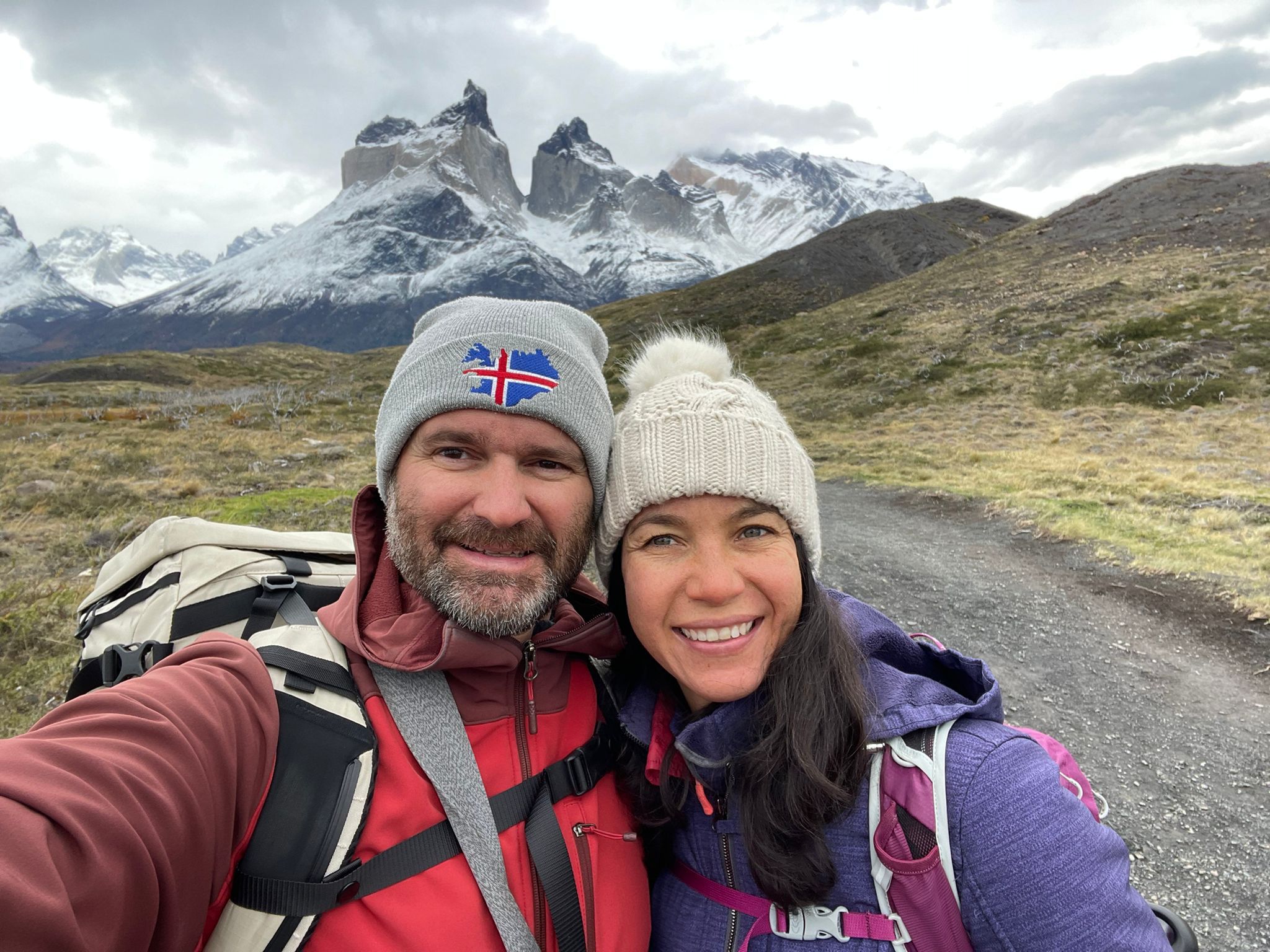
The first three days were heavily overcast. The Cuernos del Paine were there, but never fully revealed. Always partially hidden.
At dinner, we met an Australian photographer leading a workshop. He had been there for five days already.
“Same weather,” he said.
Not encouraging.
You know Patagonia is unpredictable—difícil—but still, you hope. You always hope for that one window: the right clouds, the right light, the moment where everything aligns.
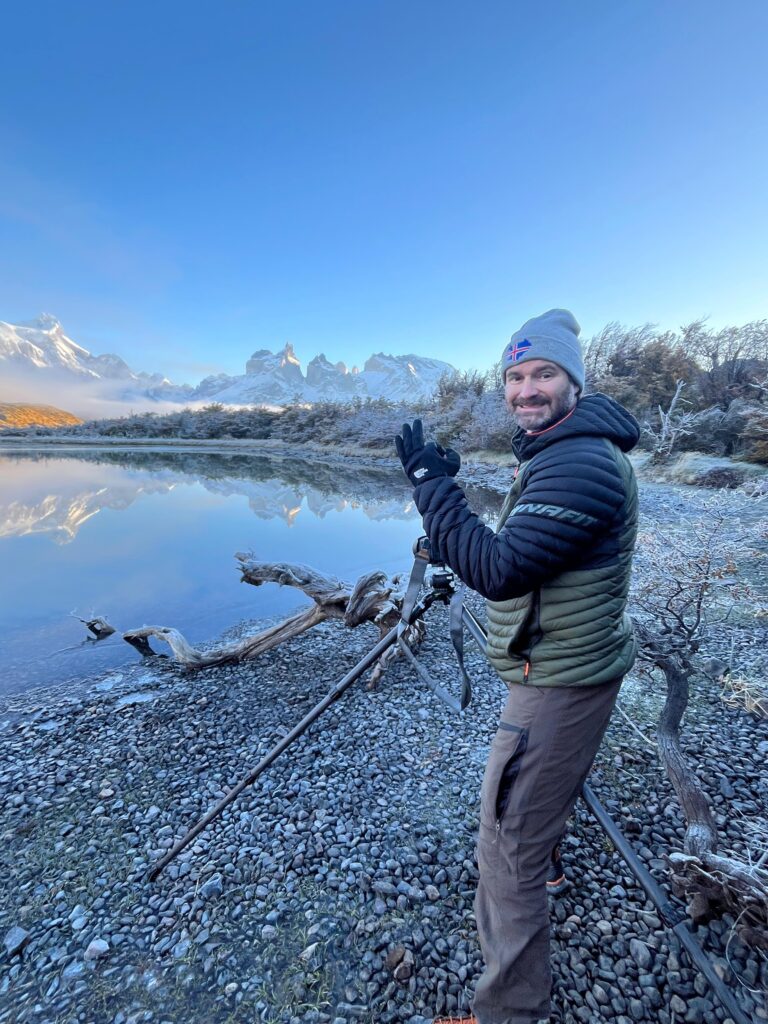
We drove out toward Explora to study the main composition of the Cuernos. Found the angle. Visualized the frame.
Now it was just a matter of waiting.
Back in 2013, when we first came, the focus was different—more hiking. We stayed in refugios, did trails like Mirador Base las Torres Hike and a small part of the W. But we hadn’t explored this side of the park before.
This time, it was about light—and lakes.
We spent the rest of that day around Lago Pehoé. At dinner, we met a British photographer. The next morning, we joined him in search of a small beach where he had shot years ago.
We walked off-trail, through open terrain, no clear path. Never quite found the exact spot he remembered—but it didn’t matter. Good light, good conversation. Worth it.
Day two: still cloudy.
We visited the cascades, looked for pumas—no luck. Only guanacos, scattered across the landscape. Todo bien.
Then came the shift.
The forecast for the next morning: partially clear.
We woke up early. I ran a bit late and thought I had missed it. But on the way to Explora, we stopped on a small hill—and there it was.
Light breaking through.
Fog sitting low.
The peaks rising above the mist.
An unreal composition. Something you don’t plan. If we had gone straight to the main spot, we would have missed it.
Sometimes being late is exactly what you need.
After those shots, we continued to the main viewpoint.
And then—everything aligned.
No wind.
Which in Patagonia is almost impossible.
A perfect reflection on the lake.
Clouds adding just enough structure to the frame.
It was all there.
Color. Light. Balance. Stillness.
The kind of moment that doesn’t happen often. The British photographer was there too—we looked at each other, both knowing. The Australian had left the day before.
Qué suerte.
We stayed out, moving around Lago Pehoé, working different compositions while the conditions held.
That time of year, the park was already beginning to close for winter. Our hotel had extended its season by just one extra week.
We happened to be there for that exact week.
Couldn’t have planned it better.
We had one more day—but the sky closed again. The peaks disappeared back into the clouds.
It had been a single window. Just one.
But it was enough.
Fresh snow on the peaks from the previous days. Light breaking through at the right moment. Everything in place.
We left Torres del Paine with that feeling—quiet satisfaction. Not because everything worked, but because something did.
Back to El Calafate. One last asado at La Tablita—increíble.
Then Buenos Aires. Friends, familiar places, Malbec, long dinners—and a few asados at friends’ homes, which, honestly, are the moments that define Argentina for me.
And finally, back to the United States.
Suitcase full.
Memory cards full.
Heart full.
And images worth the journey.
⇒ See Torres del Paine images: Patagonia – Chile
The story is 100% mine—de verdad. I just had some help from AI to make it read better. I’m a photographer and storyteller… writing is another story.